Tuesday, June 28, 2016

Let's Fall Into Science: Experiments and Investigations for the Fall 
Grades 1-3

Cover Page of Packet


I'm very excited about my new product! I have to admit, it took me a long time to write it, but I LOVE it and I hope you will too. I just wanted to share it with all of you and show you what's all included in this packet on Teachers Pay Teachers. I blogged before about how I do my experiments with mentor texts, anchor charts, and interactive notebooks. And, this packet includes just that and much more!

* Lesson Plans with mentor texts, materials and directions
* Craftivities
* Interactive Notebook activities
* Science Vocabulary Cards
* Edible Experiments and Investigations
* Expository Writing Templates
* Suggested Themes for Each Month

For each month, I give suggested themes, experiments and investigations: 
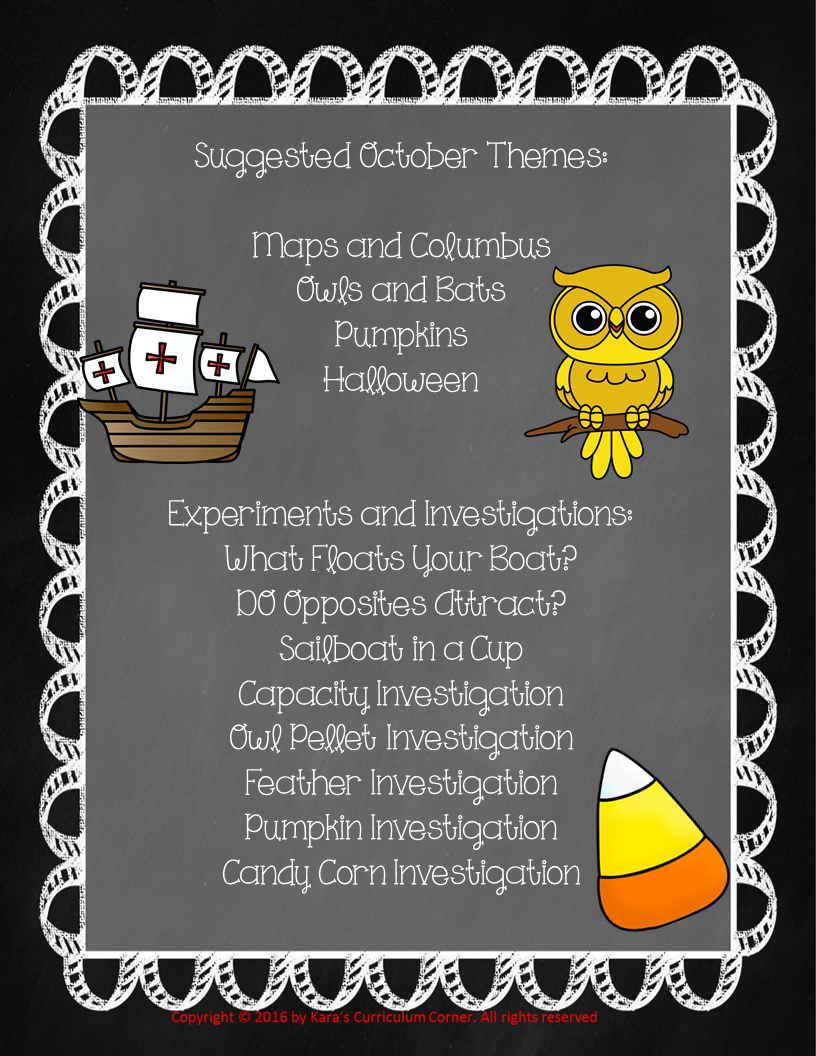
Suggested Themes and Investigations 

This lets the teacher know what's included for that month. Sometimes when you teach science and social studies, it's difficult to squeeze in the experiments, so I hope this will help. I've done all of these experiments and investigations with my students, so I know they work and my students LOVE them! I do too! 
For each month, I also included lesson plans with mentor texts, materials and directions, and there are two for every lesson.

Lesson Plan with Mentor Text

Materials and Directions for Investigation

I also included the interactive science template that the students will be completing. I included two different templates, so that if you do not have the materials you need for the investigation, then you could use an alternate template that's a little simpler. Some templates are fold-ables, some are cutting out labels, some are rotations with stations, and some are science logs. There's a lot of variety! For each lesson I've included science vocabulary cards to show the students about the topic. Here is the one I made for the parts of a leaf:
Part of a Leaf Vocabulary Card

Here is an example of the interactive notebook activity that goes with this lesson: 

Interactive Notebook Activity
Some of the science investigations involve the students to rotate around the room at different stations.  These kinds of investigations include:  Birds of a Feather, Properties of an Apple, That's so Corny!, Evergreen Trees and Pine Cones.
Here is an example of a template for these kinds of investigations: 


Evergreen Tree Rotation

Some of the investigations are edible... and who doesn't LOVE to eat in the classroom? These are fun, and easy to make too. Here's one that has the Edible Soil in a Cup.
Edible Soil in a Cup
If you want to extend the science experiment even more and have the students write about it using the scientific method, here's the fold-able that you can use for your science notebook. And, you can use this template for EVERY experiment in this packet!!!

Scientific Method Foldable

Or, if you want your students to write an expository piece about what they learned from drawing conclusions, I have writing templates in the packet as well! 

Owl Pellet Expository Writing

And, if you want your students to keep a science log, there are two: One for Weather Investigation and one for the Indian Corn Investigation. Here's the cover page for the corn investigation: "That's So Corny!"
Corn Investigation Science Log

I hope you enjoyed reading about my new product in my store. Maybe you could try it next year with your class too! 
I'm also going to write a science experiment and investigations packet for the spring... so keep watching for that! If you are interested in checking out my packet, click here: 

Let's Fall Into Science: Experiments and Investigations for the Fall Grades 1-3

Love, Kara

Graphics Courtesy of:


Sunday, June 26, 2016

Anchor Charts and How I Use Them

I think anchor charts are one of the most efficient ways to teach a skill. If they are colorful, meaningful and easy to read, the students will always refer back to them if needed. Usually anchor charts are displayed in the classroom somewhere after the skill is taught to reinforce it. I've also seen anchor charts as a literacy center, where the bulletin board is the anchor chart and the students are interacting with it using post-it notes, or a graphic organizer of some kind. The anchor chart gets switched out with every new skill. This is something I want to add to my classroom for next year! 
When teaching with anchor charts I've used them in several ways: 

To Introduce A Skill
Interact With The Students
Review a Skill Already Taught
Extension of a Skill Through Students' Own Work

I have anchor charts for EVERY subject: Reading, Writing, Math, Science and Social Studies.
I bought colored chart paper tablets from Lakeshore last summer and spent the whole summer writing out my anchor charts for each skill that I teach in every subject... it took a LONG time, but it was well worth it. My anchor charts are reusable, meaning that the students use post-it notes to interact with them so I can use them again next year.... this saves me a lot of time! 

At the beginning of the chart tablet, I made a table of contents so if I want an anchor chart about teaching Layers of Soil, I can look at my table of contents and flip to the page immediately! 
This helps so much, especially if I'm in the middle of a lesson and there's a teachable moment. I can flip to a certain anchor chart in lickety-split! I have a chart tablet for each subject. 

If you notice, at the top left hand corner, I write the mentor text that I use to read that goes with this anchor chart... this is so helpful for me when writing my lesson plans! On the right hand side of the chart, I have the page number. 


Synonym Anchor Chart for Reading

After learning a skill on the anchor chart, I extend it with a graphic organizer, game, craftivity or interactive notebook activity. When doing these activities, I keep the anchor chart displayed in the classroom so the students can refer back to them.

This is an example anchor chart I use for social studies:

Landforms

After learning about landforms, my students made a craftivity using glitter, construction paper and labels.

Craftivity: Living on Landforms

If you're interested in checking out my anchor charts for social studies, click here:

1492: Maps and Columbus Thematic Unit Grades 1-3
Example Anchor Charts for Science:
Weather Tools Anchor Chart

As an extension activity, my students colored this graphic organizer and glued into their science notebook. 

Weather Tools Graphic Organizer
 Layers  of Soil Anchor Chart for Science

As an extension activity, my students made a craftivity about what's in the soil using different colored construction paper and then made a list of things in the soil.
Craftivity: What's In Soil?

If you're interested in checking out my anchor charts for science, click here:

Rockin' Inside the Earth: Rocks and Soil Thematic Unit Grades 1-3

It's Raining Cats and Dogs! A Weather Thematic Unit Grades 1-3

Anchor Charts for Math:

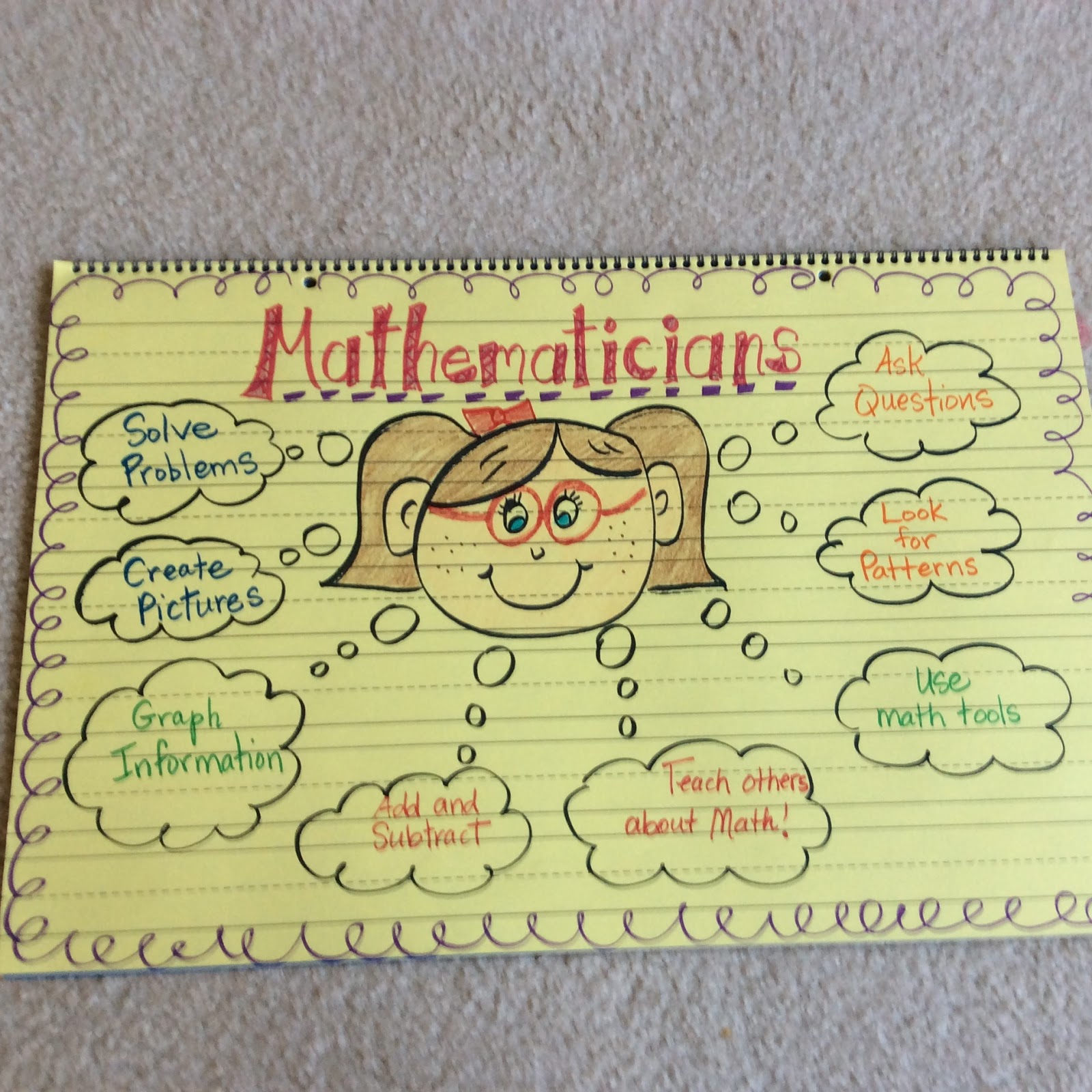
Mathematician Anchor Chart

As an extension activity, my student learned how to play the game BUMP using dice and this game template. I laminated it so we can reuse it every year. I have all of these templates for every month!

BUMP Math Game for October
Click on this link if you want to see more of my BUMP games:

BUMP Games for Every Month and Season


Graphing Anchor Chart for Math

As an extension activity, we graphed our transportation: 

Transportation Graph

If you're interested in checking out more anchor charts and graphing for math, click here:

All About Me: A Back to School Thematic Unit Grades 1-3

Example Anchor Charts for Writing:

Write From the Heart Anchor Chart for Writing

As an extension activity, my students made a heart puzzle of different topics they can write about in their schema notebook:

Write From Your Heart Graphic Organizer
Anchor Chart for Labeling in Writing

As an extension activity, my students practiced labeling different parts of animals: 
Label the Sloth

If your interested in checking out more of my anchor charts for Writing, click here:

Just Write From Your Heart: Writer's Workshop Mini-lessons Grades 1-3

Rainforest Research: Thematic Unit Grades 1-3

Example Anchor Charts for Reading: 

Antonym Anchor Chart for Reading

As an extension activity, my students wrote antonyms inside their cupcakes and cut it out for their schema notebook:

Appetizing Antonyms Graphic Organizer
Cause and Effect Anchor Chart for Reading

As an extension activity, we read the Rainbow Fish and my students completed a graphic organizer for their schema notebook.

Rainbow Fish Cause and Effect

If you're interested in checking out my anchor charts for Reading, click here:

Are You a Bookworm? Reader's Workshop Mini-lessons Grades 1-3

Sometimes, I use anchor charts to link literature together, this includes an interactive anchor chart the the students can use post-it notes to interact with. Here's an example:

Rosie's Walk Interactive Anchor Chart

While the students are sitting on the carpet and watching someone come up to the anchor chart to complete the sentence, they are writing their prepositions on their template:

Rosie's Walk Around the Farm

If you're interested in checking out my Rosie's Walk Linking Literature click here:

Linking Literature with Rosie's Walk

I hope you got some great examples of how to use anchor charts in your classroom! If you haven't used them yet... your students will LOVE them!

Love, Kara

Graphics Courtesy of:

www.theclipartstand.com
Glitter Meets Glue Designs


Monday, June 20, 2016

Interactive Notebooks 

I LOVE interactive notebooks! I think this is an excellent way to reach those students who are hands-on learners. I've seen many different kinds of interactive notebooks from simple to complicated! Mine are on the simple side... because with first graders, it's very difficult for them to remember step by step what to do in the notebook if it's very lengthy. I start off small, with simple directions at the beginning of the year, and then grow from there. I'm very picky about how they glue in their notebook. I have a mini-lesson at the beginning of the year on how to glue... dot, dot, not a lot! I don't use glue sticks, because in my experience the papers fall out and don't stick as well. 
I have 4 different notebooks in my classroom and I organize them by color:

Red: Focus Poetry Notebook
Green: Science and Social Studies Notebook
Black: Schema Notebook- Reading and Writing
Blue: Math Notebook 

This year, I want to make a table of contents for each notebook so the students can write what each page is and put the page numbers. I also want to have my students make a title page in their notebooks as well. I can't wait to try this! 

Here are some pictures of my interactive notebooks for poetry: 


\

I also have the students glue their pages together before starting a new poem so the marker and glue doesn't bleed through to the next page. At the end of the year, the students have a whole collection of poetry to read over the summer! If you are interested in checking out my Focus Poetry Packet click here: 


For science and social studies, I have the students do a lot of diagrams. They have to color, cut out their labels and glue them onto their diagram. Then, they cut out their diagram and glue it into their science or social studies notebook. Again, this is very simple for first grade. Here are some of my templates I use: 

Diagram of Compass Rose

                                                                                  
Diagram of a Tornado and a Cloud
T-Chart of Living and Nonliving
Diagram of the Eye 
Diagram of Layers of Soil 
Life Cycle of a Watermelon 
Web of Natural Resources

Diagram of an Ant

For reading, I have a schema notebook, which is a black composition book. This is where the students respond to their book they read for the day, or glue in a skill or concept that I have taught. We do this every single day during reader's workshop. Here are some pictures of my schema notebook:


Sentence Train
Author's Purpose Flip Book

For math, I simply have the students color and cut out their templates and glue it in their notebook. Here are some of my templates that I've used:
Problem Solving
Problem Solving
Addition
Subtraction
Like I said, my interactive notebooks are simple since I have first graders. But, with the older students, you can definitely make them as complicated as you like! Make sure to have a table of contents, a title page, and even a glossary! It's like a little encyclopedia with in itself! If you are interested in more of my interactive notebooks, check out my thematic units. In these thematic units are: lesson plans, interactive notebook activities, craftivities, writing templates and vocabulary cards.

1492: Maps and Columbus Thematic Unit Grades 1-3

All About Me: A Back to School Thematic Unit Grades 1-3

It's Raining Cats and Dogs: A Weather Thematic Unit Grades 1-3

Rockin' Inside the Earth: A Rocks and Soil Thematic Unit Grades 1-3

Ocean Commotion: A Thematic Unit Grades 1-3

What's Buggin' You? An Insect Thematic Unit Grades 1-3

How Does Your Garden Grow? A Plant Thematic Unit Grades 1-3

Linking Literature with Watermelon Day

Natural Resources using Interactive Notebooks

Love, Kara

Graphics Courtesy of:
The Clip Art Stand