Saturday, April 2, 2022

                       Linking Literature with The Great Kapok Tree 
Have you ever had a book that you really didn't know what or how to use it in the classroom? Well, if you have The Great Kapok Tree By: Lynn Cherry you are in luck! I'd like to share with you some ideas that I have used with it this past year in my first grade class. 

I use this book in April when we are learning about two things: The Rainforest and Persuasive Texts. It's perfect and the students LOVE this book. They could read it over and over again. 

This book lends itself to a lot of reading, writing and science activities. First, I'd like to share with you my reading activities:
I used this book with Author's Purpose, Cause and Effect and Synthesis. Here is my synthesis anchor chart: 


Synthesis Anchor Chart

When you are teaching synthesis, I tie in "I Wonder" question stems that the students ask before, during and after reading. Last, they have to tell me how their schema has changed from the beginning of the story to the end. Of course, during the mini-lesson I model what these questions sound like, so they can understand them. Then, when it is independent reading time, they can go and apply their knowledge and skills to their own book that they are reading during Reader's Workshop.
Here is the template that I use for their schema notebook: 
Synthesis Sundae

Now, we can talk about persuasive writing. In this story, the animals are trying to convince the man to not cut down the Great Kapok tree. He falls asleep and they all talk to him in his dream.
At the end, he wakes up and drops his ax and walks out of the rainforest. This story is perfect for discussing persuasive texts. So, I ask the students, "Did the animals do a great job of convincing the man not to cut down the tree?" Of course they say "YES!" Then, I ask them "How do you know?" The students write me a persuasive story from the animal's point of view to not cut down the rainforest. Here is my persuasive planning guide:


After the students have written their argument, their three reasons and conclusion, then they copy their story onto this template: 


In science, we make a craftivity called: The Layers of the Rainforest. We color rainforest animals, cut them out and glue them on the correct layer with labels. I ask the students to make the trees trunks and leaves free handed. I really want them to use their creativity! I staple their persuasive story to the bottom of this craftivity. Here is an example: 


Rainforest Layers
For a home project, I have my students make a Rainforest Diorama. They research the rainforest layers and have questions to answer. These templates get glued to the back of their diorama. These get displayed outside in the hallway under our craftivities and writing. Here are some pictures of my students with their dioramas... and by the way, they received 100 bonus bucks for these! They were so excited! 


I hope you got some great ideas of how to use The Great Kapok Tree. If you are interested in these ideas, check out my Linking Literature Packet below. 

Linking Literature: The Great Kapok Tree 


Love, 
Kara 


Saturday, March 26, 2022

                                             Life Cycles: Research and Writing


Do you love teaching about life cycles? I sure do! In this blog post I give a lot of different examples of research and writing with frogs, chickens, praying mantis, butterflies, bumble bees and ladybugs. 

There are a lot of great mentor texts to use when you are teaching life cycles. Here are some of my favorites: 


Gail Gibbons has a lot of great mentor texts for teaching life cycles. 
Make a butterfly research lapbook. You can have your students make a beautiful cover and any templates they complete will be stapled inside the lapbook. So fun!  


Chicken Lapbook: 


Frog Life Cycle Craftivity: 


Frog Lapbook: 


Ladybug Life Cycle Writing Craftivity: 


Pumpkin Life Cycle Craftivity:

Sunflower Life Cycle Research Journal: 
In this journal, the students plant a sunflower seed and then record their observations each day.


Praying Mantis Lapbook: 


Spider Lapbook: 


If you're interested in checking out my Life Cycle BUNDLE click here. You can also check out these resource individually from the BUNDLE. 

Happy Teaching!

Love, Kara 

Saturday, March 19, 2022

Hippity-Hoppity...Easter's On Its Way! 

Don't you just LOVE the spring time? It's full of fun and exciting activities to do in the classroom and outside! I love Easter time because of all the pastel colors, warmer weather, bunnies and chicks. Its a time for renewal for everyone!
I'd like to share some of my Easter activities that I do in my classroom. I have read some great Easter books. It's so hard to choose which ones to read...they are all my favorites! 


I like to do a lot of different writing and art activities with my students. When I read Rechenka's Eggs, I have my students write a procedural story about how to dye Easter eggs.  You'd be surprised at how many students have never dyed eggs before. So this is so exciting for them!  After they have written their story, then they watercolor an egg of their choice, and then glitter it!  I hang these in the hallway and they look absolutely gorgeous! If you're interested in checking out Rechenka's Egg, click here


I also have this resource by itself with just the Easter Egg Procedural Writing. If you're interested, click here

You can also use a lot of different reading skills with these stories: Author's Purpose, Retelling, Main Idea, Theme, Characterization, Cause and Effect, Story Elements, and Inferences. Here are some of the skill cards that I use for my pocket chart: 


Following these skill cards, you can use your reader's notebooks as a follow-up or extension activity. Here is one that I use for cause and effect. Notice that I put the skill card on the "teacher" side and the student template on the "me" side.  


When I read the Easter Egg by Jan Brett, or the Easter Bunny's Assistant by Jan Thomas, you can have your students write a persuasive piece about why they would like to be the Easter Bunny or the Easter Bunny's Assistant.  The students can make an Easter Bunny craftivity with their writing. If you're interested in checking out The Easter Egg resource, click here


The students can fill out an Easter Bunny Application and answer questions about if they would make a good Easter Bunny or not. They can also fill out an Author's Purpose template about their story that they wrote. After completing the application, students can write their persuasive story using the writing template. Isn't writing fun! These can be glued onto the Easter Bunny and hang in the hallway. If you're interested in checking out the persuasive writing craftivity, click  here

I've also had my students make an Easter Bunny Bag to use when they go hunting for Easter Eggs: 


If you just want your students to have fun writing about their favorite thing about Easter, check out these cute writing craftivities! 

                                        My Easter Chick 
            
                                                        My Easter Lamb


                                        My Easter Basket 

If you're interested in checking out this resource, click here
Who loves to try and catch the Easter Bunny? Here's a fun writing craftivity! 

If you're interested in checking out How to Catch the Easter Bunny, click here 

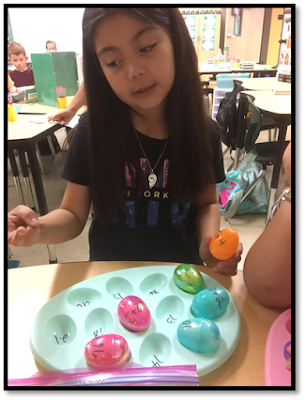
How about math? You can use Easter Eggs to write addition or subtraction facts and the students have to match the egg with the correct answer in their Easter Tray. This is so easy to make and the students LOVE it! 

I hope you can find something that you would love to try with your students! 

Happy Easter Everyone! 
Love, Kara 


Saturday, March 5, 2022

                                      120th Day Celebration- Texas Style! 


If you LOVE having a 120th Day celebration with your students, check out his blog post! We dressed up as cowboys/cowgirls and had a Texas themed celebration. We also asked some parents to help out for our stations. Here are some great activities you could do with your students! 

120 Exercises: 120 Jumping Jacks, Sit-ups, head rolls, shoulder rolls, jumping on one foot, etc...


120 Cup Stacking: The students can stack 120 cups and make their own structure: 


120 Snack: We used 12 different ingredients: cheerios, goldfish, gummy bears, m&ms, raisins, white chocolate chips, chocolate chips, butterscotch chips, fruit loops, Kix, and cheese-its etc... We used the plastic chip trays from the dollar store. The students had baggies that they put their snack in to eat later. 

120 Necklace: We used 12 Penne Pasta for the 10s and 12 Wagon Wheel Pasta to separate the 10s to make our necklace. 


120 Hats: 


Race to 120: We used plastic horses and a foam dice to roll to race to 120 on the floor mat. 


120 Quilt: Each student made a number to make a 120 chart on the carpet. 


120 Commitments: We wrote on the stars about making a good choice and put it on the bulletin board. 


Snake in a Boot: The students used rubber snakes to throw the snake in the boot to see if they could make it. 


120 Penny Flip: the students flipped a penny 120 times and then colored in their mat. 


I hope your 120th Day is just as exciting! Have fun!

Love, Kara 


Saturday, February 26, 2022

          Integrating Balanced Literacy and Thematic Units! 
                               What a Perfect Combo! 


Did you know that you can integrate Balanced Literacy and Thematic Units to make a "Perfect" combo? Of course it takes a lot of planning, creating, organizing and time, but once you have all of that accomplished, it will help your teaching flow a lot more effectively. I will walk you through it...so keep reading to find out more! 

The first thing you need to do is look at your standards for science and social studies. That's where your main drive for your thematic unit will stem from. Decide which thematic units you and your team want to teach. You may be thinking...yuck thematic units are a trend of the past! Well, that may have been true back in the 80's where you would only teach about apples and their life cycle and not use apples to teach properties of matter, adjectives, or 5 senses. The standards have changed a lot since then, and so have our approach to teaching thematically! I've found an easy way to integrate Reader's Workshop, Writer's Workshop, Math Workshop, Guided Reading, Focus Poetry and Word Work together so my students can make better connections! It's amazing and fun! 

Let's start with a standard for social studies. I live in Texas, so in March we do a big thematic unit on Texas Symbols and Historical Figures since March 2nd is Texas Independence Day:
 Here are the TEKS that help us know what to teach about Texas:

1.) Identify historical figures such as Sam Houston who have influenced the community, state, and nation.

2.) Describe the origins of customs, holidays and celebrations of the community, state, and nation such as San Jacinto Day.

3.) explain state patriotic symbols including Texas flags and the Alamo. 

4.) recite and explain the meaning of the Texas Pledge and identify the anthems and mottoes of Texas. 


Ok- so now that you selected your standards for your thematic unit, break up your balanced literacy components and subjects. This is helpful to know what genres and what mentor texts you will be reading for each subject: 

Reader's Workshop: Fiction Texts
Armadillo Rodeo, The Legend of the Bluebonnet, Legend of the Indian Paintbrush, Click Clack Moo Cows that Type, Who Took the Farmer's Hat?, When the Cows Came Home, The Big Red Barn, Meanwhile, Back at the Ranch and When The Cows Came Home. 


Writer's Workshop: Fiction/Procedural Texts 
Armadilly Chilly, The Lonesome Star, and How to Be a Cowboy.


Math Workshop: 120th Day Texas Celebration!  Texas Counting Books, The Three Little Javalinas, 123 Texas, Counting the Texas Way, and Horse and Hen Count to 10.


Word Work: 
Texas ABC Books, Words in ABC Order/Syllables
L is for Lonestar, T is for Texas, and Texas Alphabet.


Guided Reading: Leveled Books about armadillos, rodeos, cowboys, horses, cows, deserts, or The Alamo and Magic Tree House: Ghost Town at Sundown. 


Focus Poem: Texas Our Texas-anthem.


Social Studies: Non-fiction Texts 
Texas Symbols, Texas heroes, The Alamo, San Jacinto Day, Sam Houston, Texas Pledge, Texas Motto, and Texas State Anthem. 
Alamo A to Z, Voices of the Alamo, Cowboys and Cowgirls, B is for Buckaroo, Goodnight San Antonio, Texas Jack at the Alamo, and Susanna at the Alamo. 


Science: Non-fiction Texts
Oil Spill - science experiment about how oil and water mix. 


Spelling: You can do any word list you want, and I make our challenge words theme related for example: Rodeo, Cowboy, Texas, Oil, Cowgirl, Horse, Alamo...

Next, I like to set up my Theme Center with Texas. This is a center that can be switched between science and social studies depending on your theme. Here is what my Texas Theme center looks like: 


I have posters of the Texas Heroes, Regions of Texas, puzzles of Texas, Texas books, an Alamo model and soldiers, stencils, 6 flags over Texas, oil in a jar, pecans, bluebonnets, models of cowboys, cattle and much more. This is the center template that I use for my students to complete at the center after they observe the items there: 


Ok- are you still with me? Next you will want to decide which activities, interactive notebooks, craftivities, experiments, shared reading, interactive writing, story templates, etc... that you will be having your students engaged in. I'll give you a couple of examples of some activities: 

Reader's Workshop Mini-Lesson: Review Sequencing: BME and Text Connections
My students make craftivities of The Legend of The Indian Paintbrush and Legend of the Bluebonnet during their independent reading time. Click here for The Legend of the Bluebonnet. 
Click here for The Legend of the Indian Paintbrush. 


Writer's Workshop Mini-Lesson: Procedural Texts
How to Be a Cowboy/Cowgirl

My students write a procedural story about how to be a cowboy/cowgirl and then we watercolor a sunset with silhouettes of a windmill and cowboys. 


How to Make Chili: 

We make chili in the crock pot and then we write about the procedure: 


                       Click here for How to Make Chili Craftivity.


                       Math Workshop: 120th Day Celebration 

We have our students dress up like cowboys/cowgirls and we have stations around our neighborhood with 120/Texas games and activities. Here is the 120 Ten Frame Counting activity we use. The students created a trail mix and counted out 10 of each snack. We had goldfish, raisins, pretzel sticks, chocolate chips, gummy bears, marshmallows... it was so much fun! 


Click here for 120th Day Templates. 

Social Studies: Texas Maps and Regions, Texas Symbols, and The Alamo. Here are some vocabulary cards that I use: 


We made an Alamo using beans and wrote a story about it: 


We also made a Texas Map with the Cities and Rivers: 


We also make a Texas Symbol Book with a cover page, table of contents, each state symbol, author page, may favorite symbol and a glossary. 


Science Experiment: What happens when oil and water mix? We learn about how one of the Texas natural resources is oil and how oil is used in our everyday life. We talk about Spindle Top and how it was the first famous oil rig in Texas. Then we mix oil and water and predict what will happen. Here is an interactive notebook template that my students do: 


Then, we end our thematic unit by visiting the Alamo on a Saturday field trip! We have a picnic lunch on the grass and go shopping at the gift shop! So fun! 


I hope that I helped give you some ideas about how to plan for a thematic unit. It can be done if you carefully plan. And, the best part is... you'll have it for next year! And, your students will learn so much and make so many great connections! 
If you're interested in check out my Texas Thematic Unit, click here . Hope ya'll have a great time! Please comment down below if you have any questions. Happy Teaching! :) 

Love,
Kara